
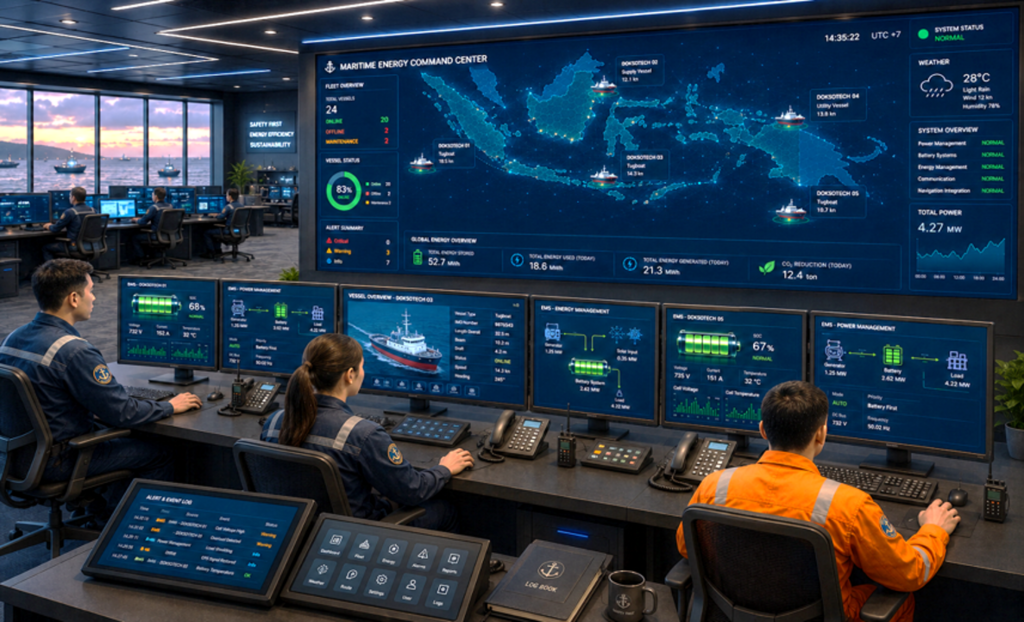
We are committed to become the best strategic partner in communication solutions and energy efficiency implementations and its services in Indonesia.
DoksoTech (PT. Doksologi Mediatek Humanika) was founded in 2019 to provide the best services to customers. There are five business areas we focus on:
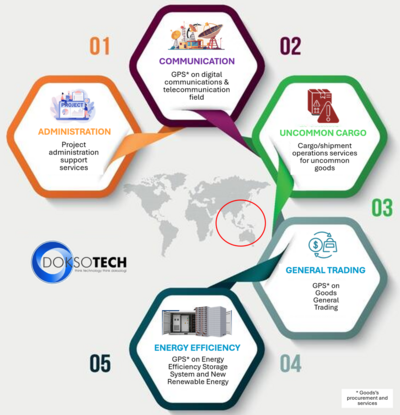

Without abandoning the services that already exist, entering the year 2026, PT. Doksologi Mediatek Humanika (DoksoTech) focuses on goods/services procurement and energy efficiency solutions through the provision of Energy Efficiency Storage System (E2SS) and new and renewable energy solutions as business priorities.
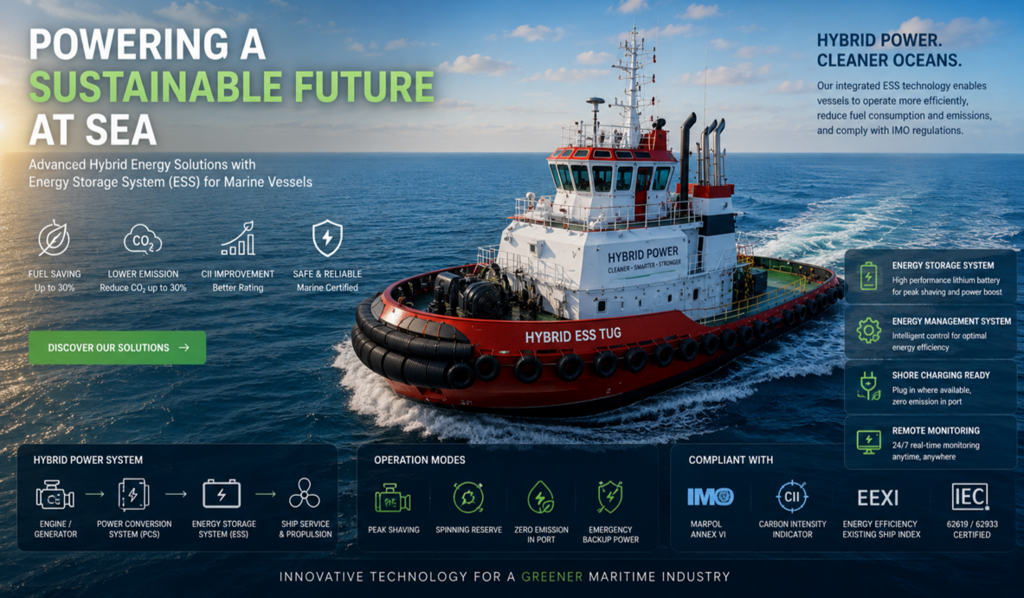
E2SS (Energy Efficiency Storage System) on ships is an electric energy storage system used to store energy and be ready for use when needed.
E2SS uses large-capacity batteries, usually based on lithium-ion. The working principle is to take advantage of 'unused' energy when the generator is running and store it; as needed, the energy in the battery will be used and the generator turned off.
This system reduces generator operating time. The effects include fuel savings (for the generator), lower generator maintenance costs, implementation of exhaust emission control, commitment to environmentally friendly operations, and availability of emergency/backup power supply.
What is a Battery Management System (BMS)?
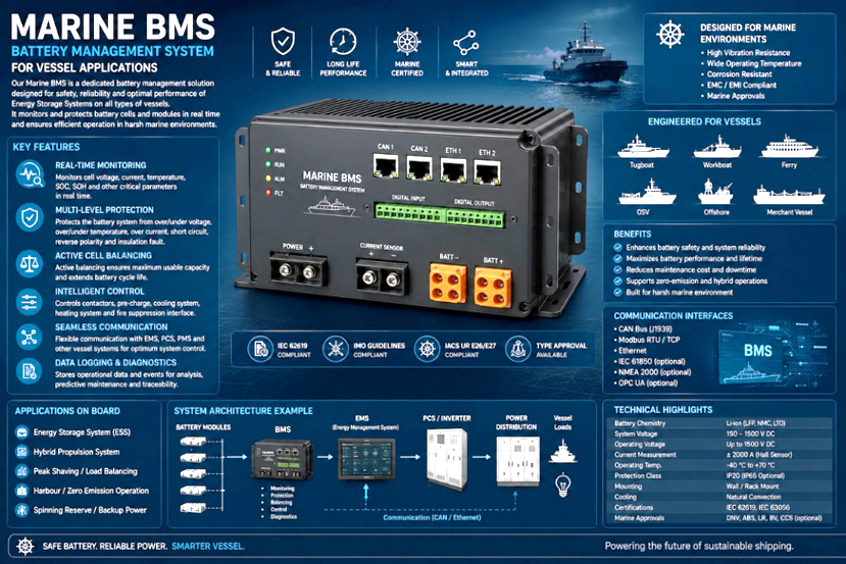
A Battery Management System (BMS) is an electronic system that monitors, controls, and protects a battery to ensure it operates safely, efficiently, and with optimal lifespan. In an Energy Storage System (ESS), the BMS is a key component that ensures each battery cell operates within safe limits. The main functions of a BMS are:
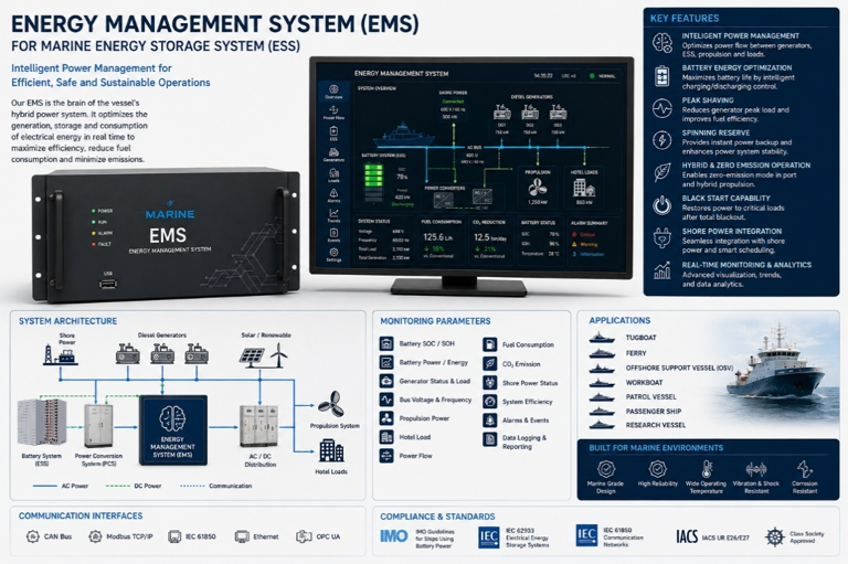
An Energy Management System (EMS) is the supervisory control system that optimizes the generation, storage, distribution, and consumption of electrical power onboard a vessel. While the Battery Management System (BMS) focuses on the health and safety of the battery itself, the EMS manages how the battery interacts with generators, propulsion systems, shore power, and vessel loads to achieve safe, efficient, and economical operation.
Primary functions of EMS consist of:
(1) Power management, includes of: (a) optimizes power generation and distribution, (b) balances load among diesel generators, ESS, and renewable sources, (c) minimizes fuel consumption, and (d) prevents generator overload.
(2) Battery energy optimization, includes of: (a) controls battery charging and discharging, (b) maintains target State of Charge (SOC), (c) schedules charging during low-load conditions, and (d) maximizes battery service life.
(3) Hybrid power control, includes of: (a) coordinates operation between diesel engines and ESS, (b) supports hybrid propulsion, (c) enables zero-emission operation, and (d) automatically selects the most efficient operating mode.
(4) Peak shaving, includes: (a) supplies battery power during sudden load increases, (b) reduces diesel generator peak loading, (c) improves fuel efficiency, and (d) extends generator maintenance intervals.
(5) Spinning reserve, includes: (a) uses ESS as instant backup power, (b) improves power system stability, and (c) reduces the number of generators required online.
(6) Black start, includes to restores electrical power after a total blackout, and supplies critical loads until generators are synchronized.
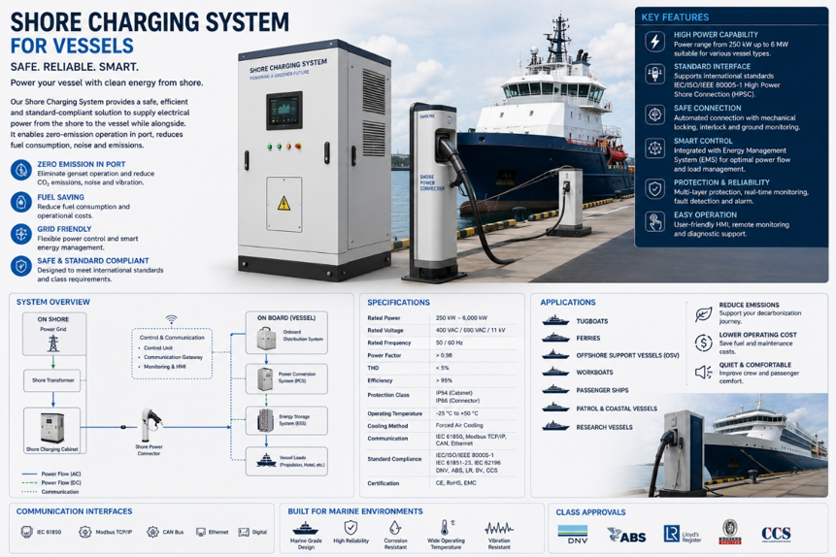
A Shore Charging System (SCS) is an integrated electrical infrastructure that enables a vessel equipped with an Energy Storage System (ESS) to safely recharge its onboard batteries using electrical power supplied from the shore while berthed at a port or terminal. The system provides controlled, efficient, and standards-compliant energy transfer between the shore-side power source and the vessel's onboard electrical system. The Shore Charging System typically consists of a shore charging station, high-power charging interface, charging cable management system, protection and control equipment, communication interface, and an onboard Power Conversion System (PCS) integrated with the vessel's Battery Management System (BMS) and Energy Management System (EMS). By replacing or reducing the operation of diesel generators during port stays, the Shore Charging System significantly decreases fuel consumption, greenhouse gas emissions, noise, and maintenance costs while supporting zero-emission port operations and sustainable maritime transportation.
Key functions:
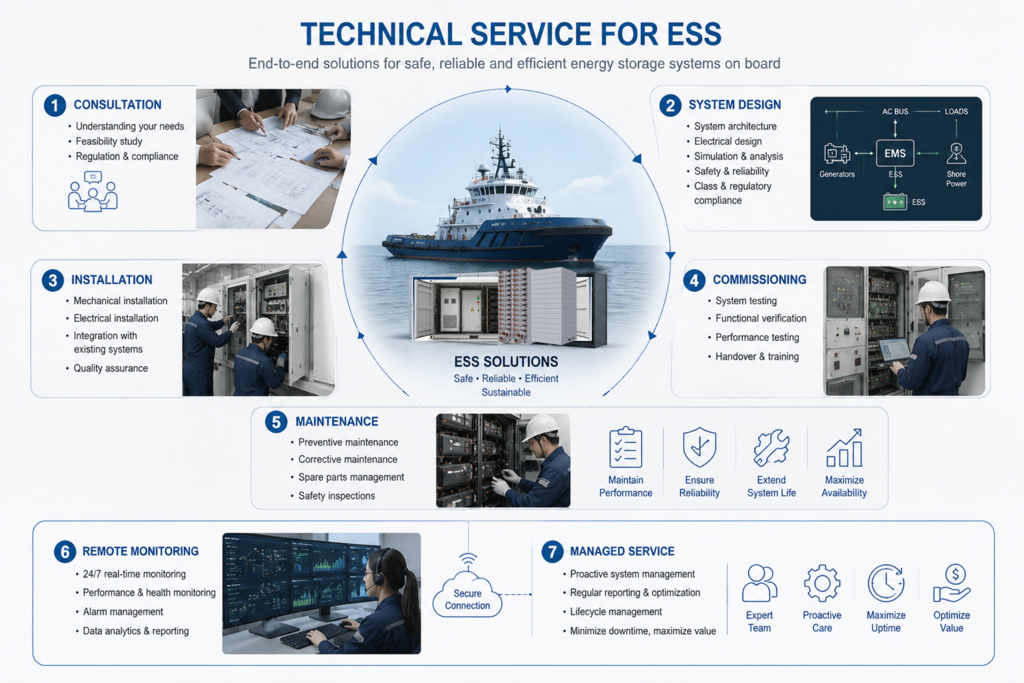
Technical services in ESS Vessel covers consultation, system design, installation, commissioning, maintenance, remote monitoring, managed service.
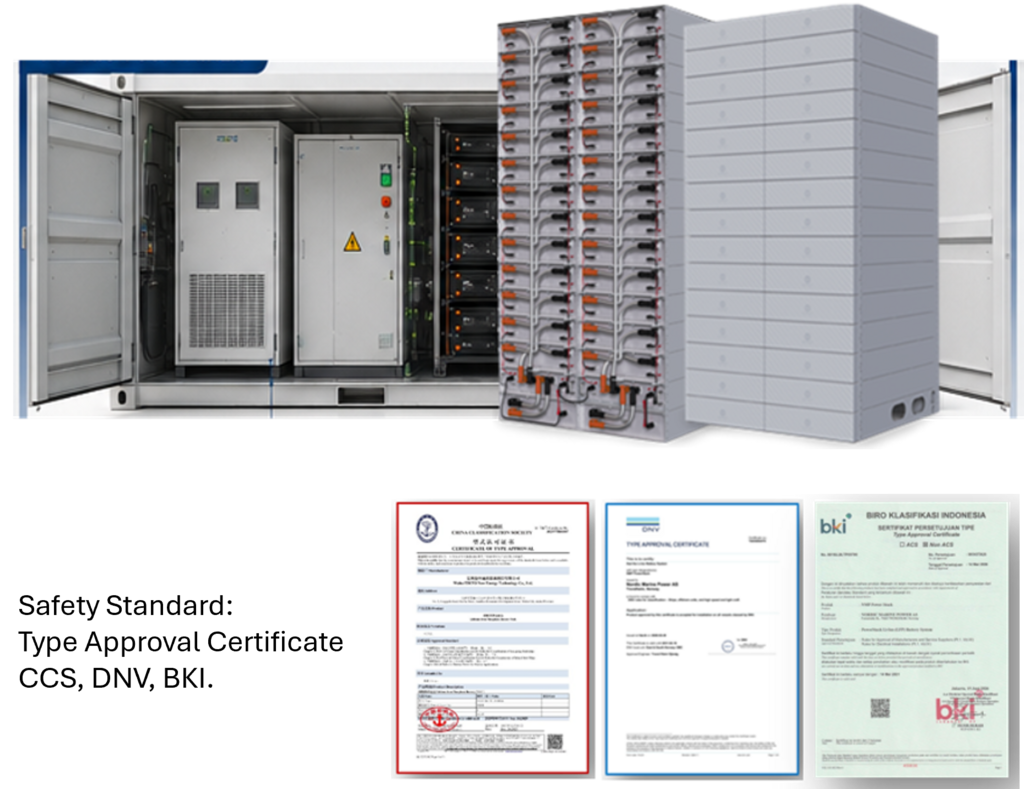
Along with products certified according to Indonesian national standards (BKI) and international standards, DoksoTech's technical services are handled by professional and certified personnel and teams in the relevant technical fields.
DoksoTech is supported by foreign manufacturing companies with extensive experience in shipping and E2SS technology.
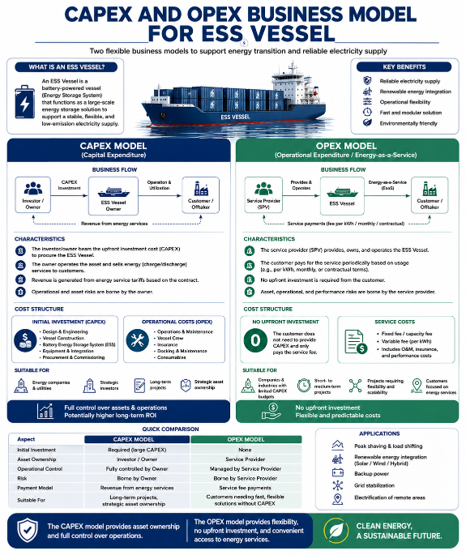
Business options according to customer needs.
DoksoTech offers product/technology ownership options where customers can choose a purchase scheme (CapEx) or a managed services-based rental (OpEx) according to their business policies and company operational needs.