NEWS

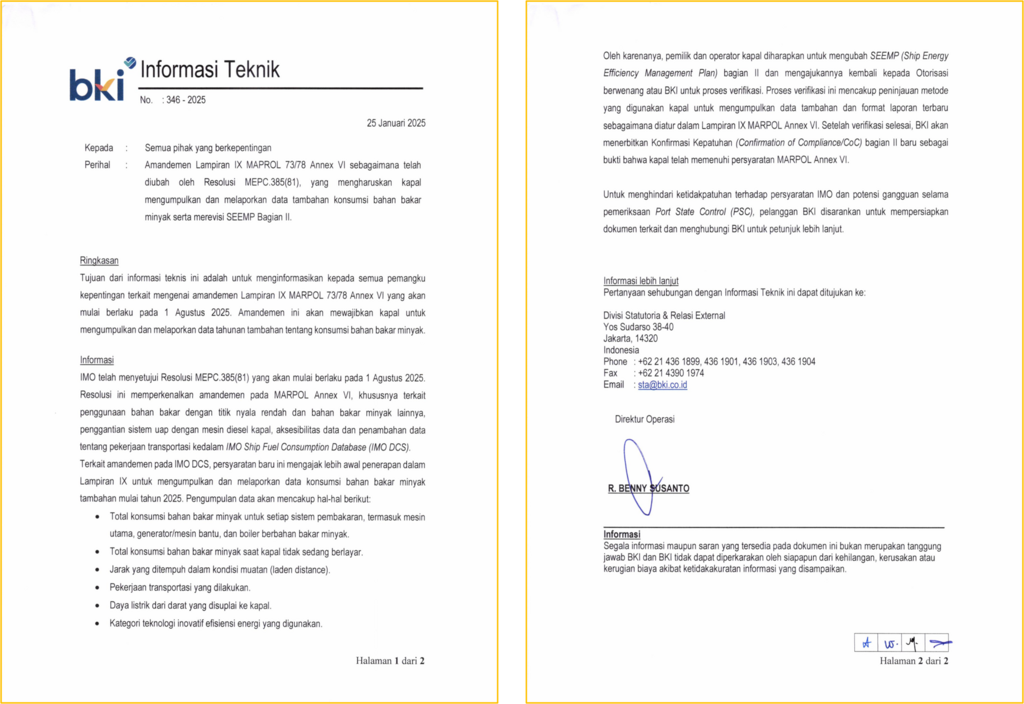
MARPOL ANNEX VI

MARPOL Annex VI regulates air pollution from ships, establishing limits on emissions of nitrogen oxides (NOx) and sulfur oxides (SOx), and promoting the use of cleaner fuels to protect human health and the environment. Purpose and scope: MARPOL Annex VI, part of the International Convention for the Prevention of Pollution from Ships, specifically addresses air pollution caused by ships. It aims to reduce harmful emissions that contribute to air quality issues and climate change. The annex sets forth regulations that apply to all ships, regardless of flag, when operating in waters under the jurisdiction of countries that have ratified the convention. Key regulations: (1) Emission limits; (2) Fuel quality standards; (3) Emission control areas (ECAs); and (4) Compliance and enforcement.

Environmental Impact: The implementation of MARPOL Annex VI is crucial for addressing the significant contribution of shipping to global air pollution. Research indicates that shipping accounts for a substantial percentage of global NOx and SOx emissions, which can lead to serious environmental and health issues, including respiratory diseases and acid rain.
SHIP ELECTRIFICATION

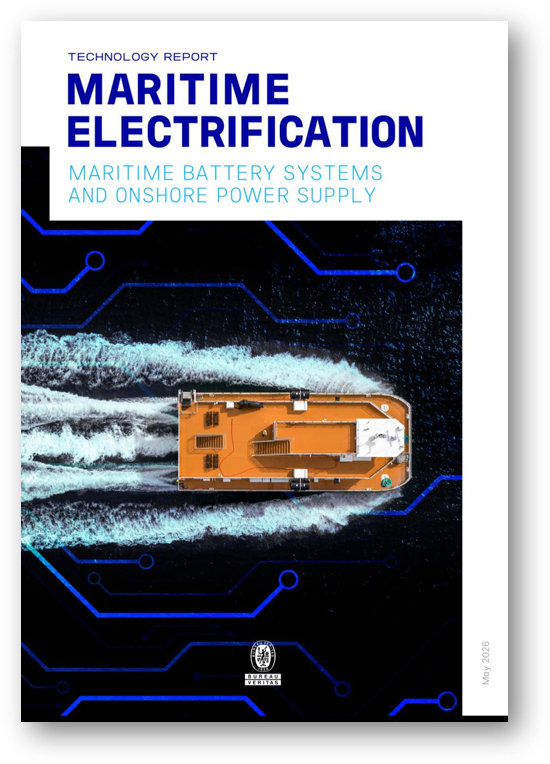
Powering ships with batteries.

High energy density and a long lifespan make lithium-ion (Li-on) batteries the maritime industry’s battery of choice. A growing number of ships are using batteries on board, either as part of hybrid configurations or as a sole means of propulsion. Ships powered by batteries benefit from greater energy efficiency, improved response times and lower noise and vibrations. Using batteries also cuts tank-to-wake greenhouse gas emissions and air pollution.

Taking advantage of onshore power supply.

For ships at port, connecting to onshore power is another path to reducing emissions. This is especially true for large ships that cannot be fully electrified while at sea. When at berth, a ship using onshore power can cut its engines, eliminating CO2 emissions, as well as sulfur oxide (SOx), nitrogen oxide (NOx) and particulate matter. This helps reduce local air pollution, directly improving air quality in ports and nearby communities. Electricity supplied to the vessel usually comes from the grid, and occasionally off-grid sources such as port generators or renewable energy plants.

INSIGHT

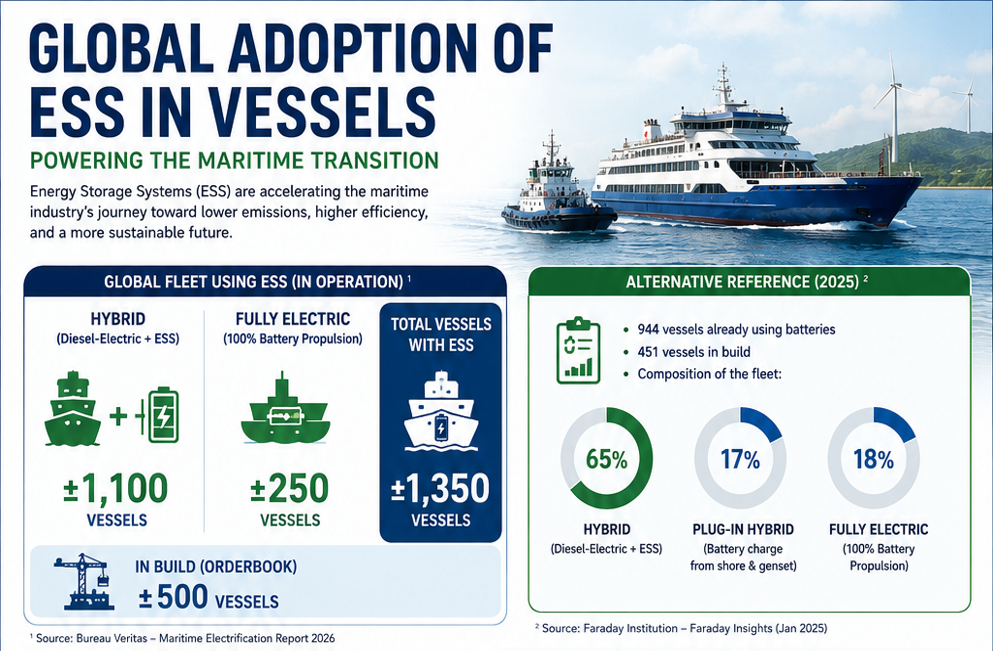
HOW MANY ESS EXIST?

Do we know how many ships are currently using ESS?

Powering ships with batteries.

High energy density and a long lifespan make lithium-ion (Li-on) batteries the maritime industry’s battery of choice. A growing number of ships are using batteries on board, either as part of hybrid configurations or as a sole means of propulsion. Ships powered by batteries benefit from greater energy efficiency, improved response times and lower noise and vibrations. Using batteries also cuts tank-to-wake greenhouse gas emissions and air pollution.

Taking advantage of onshore power supply.

For ships at port, connecting to onshore power is another path to reducing emissions. This is especially true for large ships that cannot be fully electrified while at sea. When at berth, a ship using onshore power can cut its engines, eliminating CO2 emissions, as well as sulfur oxide (SOx), nitrogen oxide (NOx) and particulate matter. This helps reduce local air pollution, directly improving air quality in ports and nearby communities. Electricity supplied to the vessel usually comes from the grid, and occasionally off-grid sources such as port generators or renewable energy plants.

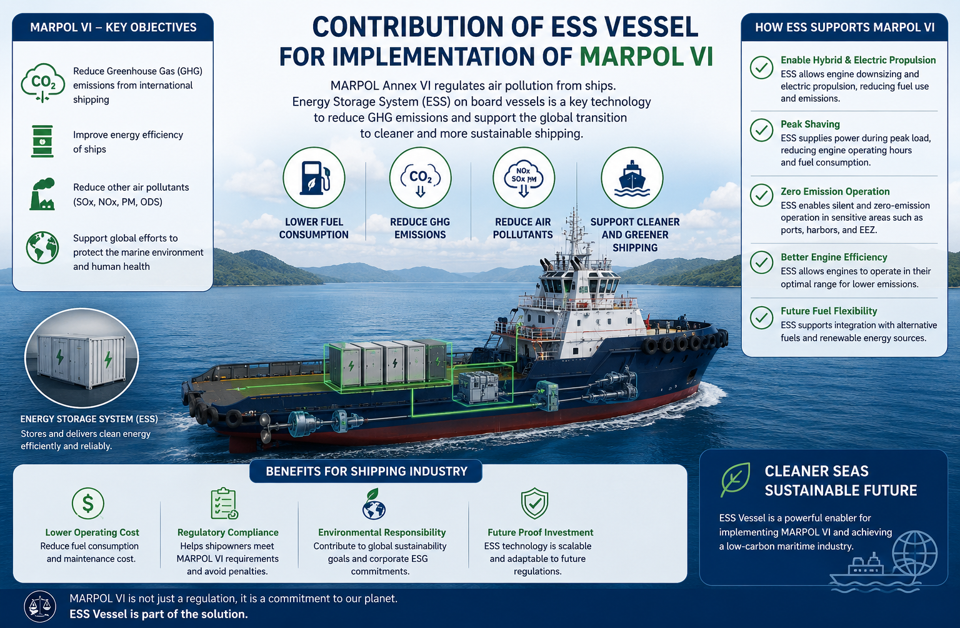
ESS ON MARPOL VI

Do we know how a ship's ESS contributes to the implementation of MARPOL Annex VI regulations?

ESS on board vessels is a key technology to reduce GHG emissions and support the global transition to cleaner and more sustainable shipping.